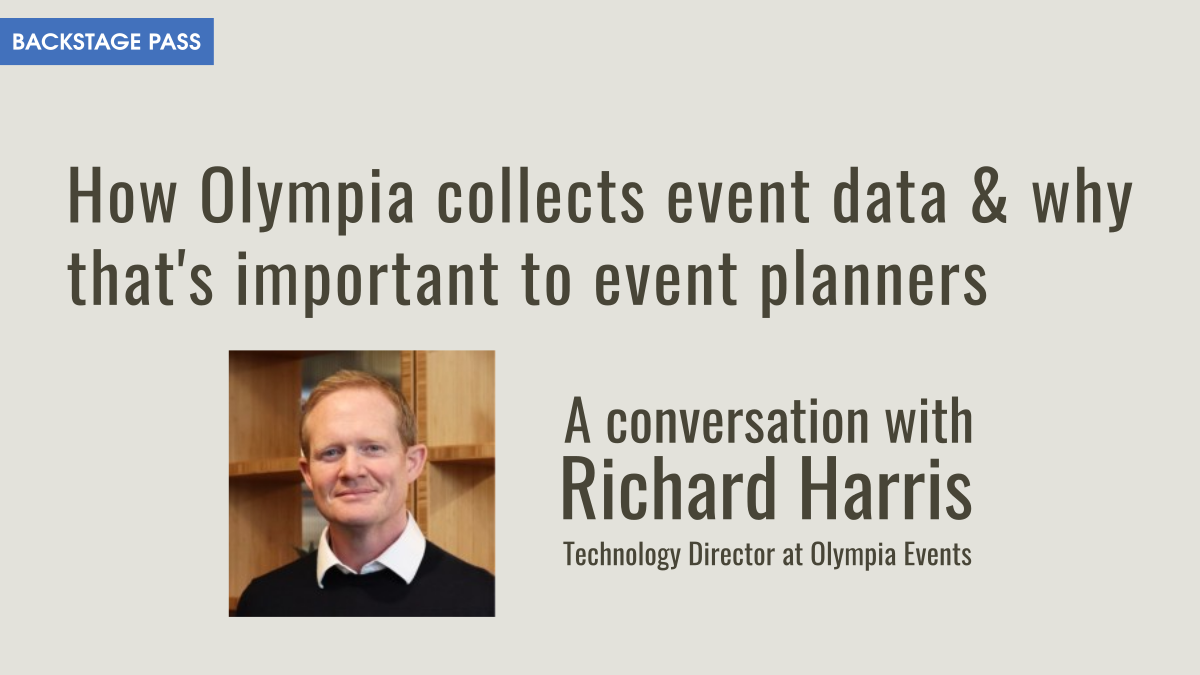
Event profs are regularly told they should be collecting data from their events. For example measuring the dwell time at exhibitor stands, and tracking the locations of showfloor hotspots. However, is that enough? What kind of measurements do you need to tell the story of your event?
At this year’s Event Tech Live, I talked with Richard Harris, the Technology Director at Olympia Events. We discussed some of the ways they capture data, and what event planners should be asking venues.
Topics discussed in this episode…
- Data Context and Triangulation: Simply tracking visitor numbers or basic dwell times is insufficient because not all dwell time represents genuine engagement. Combining multiple data points over time, known as triangulation, helps organisers distinguish between active stand interest and people simply stuck in queues for coffee or toilets.
- Transforming “Dead Zones” with Real-Time Data: Venues can use anonymous device tracking and heat maps to identify bottlenecks and underperforming areas on the show floor. Sharing this real-time insight allows event organisers and exhibitors to proactively adjust layouts, improve signage, or direct footfall away from congested spots.
- Venues as Strategic Growth Partners: Rather than merely renting out space, experienced venues like Olympia Events aim to act as long-term growth partners. By collaborating early in the planning stages, venues and organisers can establish shared key performance indicators (KPIs) and use historical data to optimise floor plans for future shows.
- The Evolution of Venue Technology Roles: Modern venue technology leadership has expanded far beyond traditional IT maintenance to encompass data strategy, digital estates, and the overall visitor journey. Richard Harris notes that defining clear objectives and problems to solve is far more challenging and vital than simply purchasing new hardware.
- Connectivity as a Fundamental Utility: With mobile phone signals frequently struggling inside large urban venues, reliable venue Wi-Fi has become as essential as running water and electricity. Making Wi-Fi frictionless—through clear signage and QR codes—protects venue revenue and prevents poor connectivity from ruining an attendee’s impression of an event.
- Early Tech Planning and Human Experience: Event planners should discuss their IT, bandwidth, and data requirements with venues as early as possible, treating them as core elements alongside floor space. Ultimately, pairing these technical insights with familiar, experienced venue staff creates a seamless, repeat-business-driving experience for exhibitors and visitors alike.
Huge thanks to Evolution Dome, the temporary inflatable structure specialist, for allowing me to record inside their Office Pod that was on their exhibition stand.
- Connect with Richard Harris on LinkedIn
- Article about London ExCel’s connectivity infrastructure investment (£9 million not £12 million as mentioned)
A huge thank you to our sponsors Vividink, Function Fixers and Eventflow for their continued support. You can show your support by subscribing wherever you listen to podcasts and don’t forget to share this episode with friends and colleagues.