For event planners and exhibition organisers, understanding how visitors move through a venue has traditionally relied on blunt instruments. Total ticket sales and door-scanner counts provide a baseline, but they rarely explain what actually happens once attendees step onto the show floor. To gain a true picture of audience engagement, modern venues and organisers are increasingly turning to a more sophisticated layer of technology: Bluetooth beacons.
For industry professionals who have heard about beacons but remain unsure of how they work or what they reveal about attendee behaviour, understanding their practical application is key to improving future event design.
What are Bluetooth beacons and how do they track attendees?
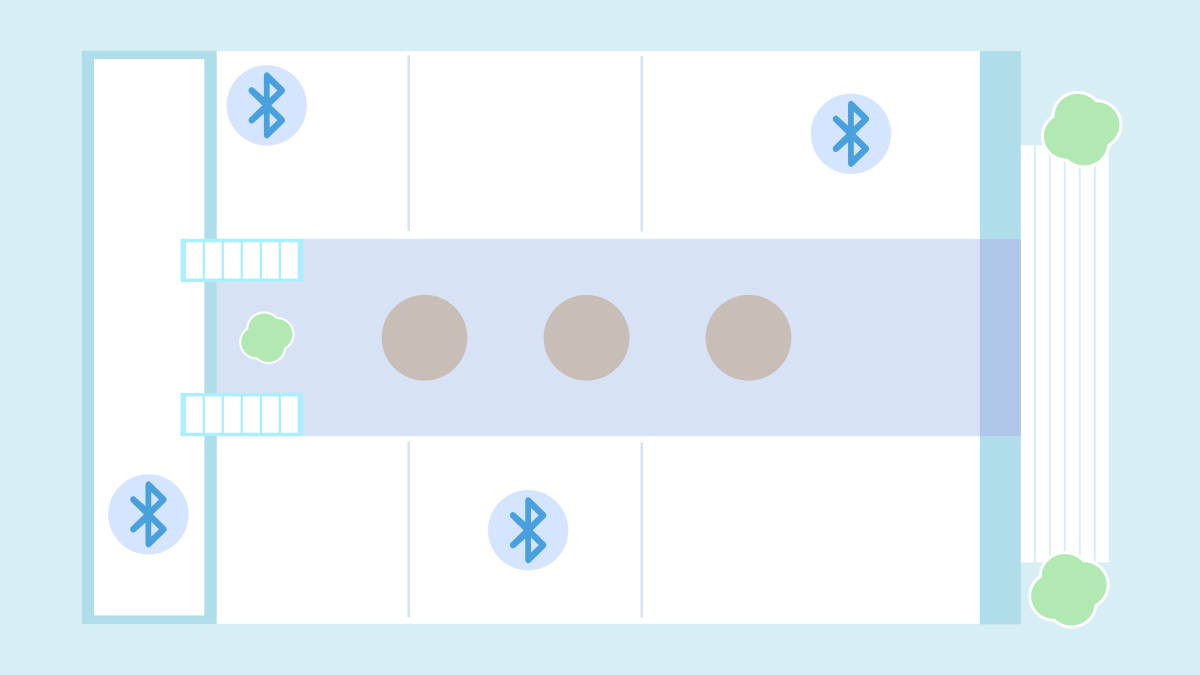
Bluetooth beacons are small, wireless transmitters that use Bluetooth Low Energy (BLE) technology to broadcast signals to nearby mobile devices or tracking sensors. In a large exhibition hall, these devices pick up anonymous device signals, such as smartphones or wearables, as attendees move through the space.
Crucially, this tracking focuses on devices rather than individuals, ensuring data remains anonymous while still painting a clear picture of crowd movement and traffic trends. As Richard Harris, technology director at Olympia Events, noted during a recent discussion on event data insights, venues can even deploy algorithms to aggregate multiple devices belonging to a single person, such as a work phone, personal phone, and smartwatch, ensuring accurate movement tracking without compromising privacy.
Moving beyond simple footfall: The power of context and triangulation
Traditional metrics often stop at how many people entered a hall or walked past a specific stand. However, beacons allow organisers to collect three-dimensional data, combining location, spatial movement, and time.
This temporal dimension helps event teams move past one-dimensional metrics and avoid common data traps. For instance, an exhibitor might look at a dense crowd lingering near their stand and assume high engagement. However, beacon data and context can reveal whether those attendees are genuinely interested in the exhibitor’s offerings or simply stuck at the tail end of a nearby coffee or restroom queue.
By bringing together disparate data points, such as dwell time, footfall hotspots, and point-of-sale transactions, organisers can “triangulate” information to tell the true story of how an event behaves.
Practical applications for event planners and venues
Understanding attendee behaviour through beacon technology offers several actionable benefits for both venues and event organisers:
- Optimising floor layouts and sponsor value: Organisers can track whether high-value sponsors located in traditionally quiet zones are still drawing traffic across the entire hall, backing up instinct with hard evidence.
- Managing congestion and wayfinding: Similar to techniques used at music festivals, real-time tracking data can identify bottlenecks around popular bars or food stalls, allowing operations teams to use digital signage and wayfinding tools to guide attendees toward underutilised areas.
- Supporting exhibitors in real time: Instead of waiting until post-event surveys to find out why an exhibitor felt isolated in a “dead zone,” proactive venues and organisers can review movement data during the show, offering targeted advice on foot traffic patterns and engagement strategies.
Looking ahead: Making data actionable
As venues and event planners work closer together from the initial planning stages, integrating insights from beacon technology transforms venues from passive hosts into active growth partners. For newcomers looking to elevate their data strategy, moving past basic headcounts and embracing contextual, time-based tracking is the next frontier in creating more engaging, frictionless events.
Bluetooth beacons are revolutionising how event organisers and venues track attendee movement, moving beyond simple footfall counts to reveal real-time insights into crowd behaviour, dwell time, and floor congestion. By capturing anonymous device data over time, event professionals can gain a clearer understanding of how visitors interact with exhibition spaces, helping to optimise layouts, eliminate bottlenecks, and drive better commercial value for sponsors.