
Simon Hainsworth is the Founder and Managing Director of Corporate & Sporting Events (CSE), which specialises in logistics for sports and business events across the globe.
If we were handing out medals for hosting the biggest and best events, the UK would surely have to be on the podium. But how did a comparatively tiny island become the go-to for sports and business occasions alike? And just why are we the frontrunners when it comes to organisers seeking destinations for their global events?
A long, proud history
Proving if you do something well once, you often get given the same job to do time after time, the UK has shown off its expertise at events hosting, and been the obvious choice for future occasions as a result. Not only that, but we can legitimately claim to be the birthplace of some of the world’s most beloved sports, and consistently one of the most prominent countries across the globe when it comes to business and finance.
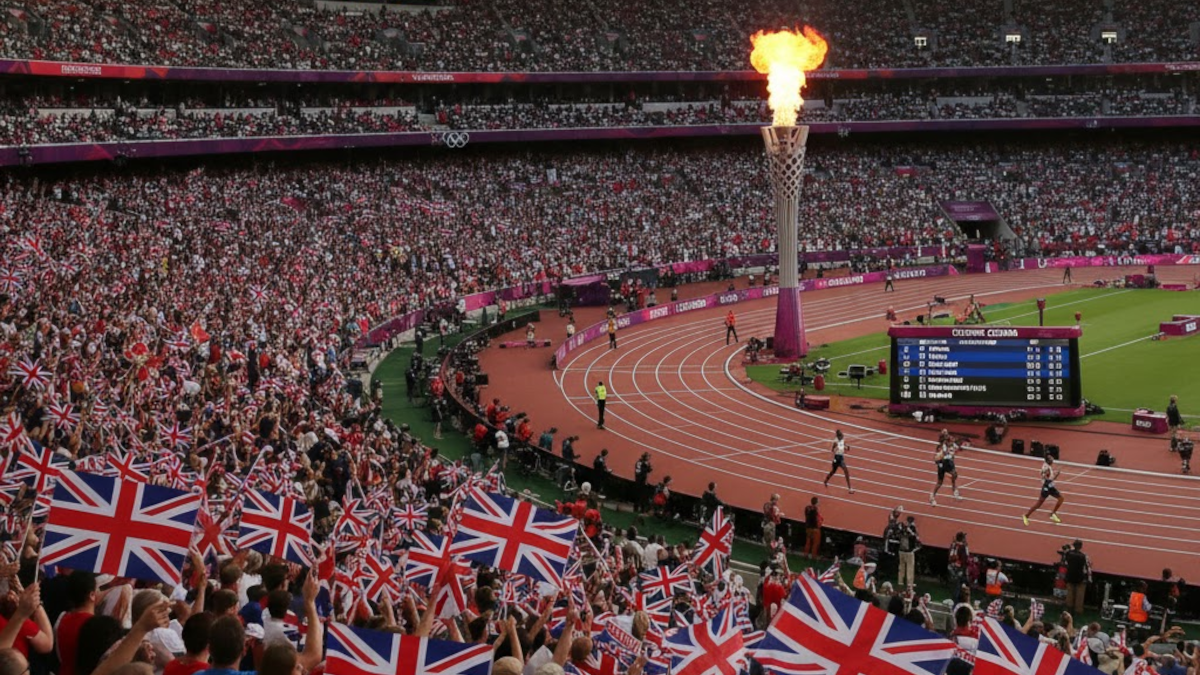
The Olympics is perhaps the pinnacle of all sporting events, and it is no coincidence that London is one of only three cities picked to host three summer games since the modern version was revived in the late 19 th century – Paris has also hosted three, and Los Angeles is set host its third in 2028. Not only does the UK’s infrastructure and existing network of stadiums and other sporting sites stand it in good stead when submitting an Olympic bid, we can also claim responsibility for the fact that the games haven’t been resigned to history.
In a small town in Shropshire, Dr William Penny Brookes launched the Wenlock Olympian Society – inspired by the Ancient Greek games – which attracted the attention of Baron Pierre de Coubertin, who co-founded the International Olympic Committee in 1894. Two years later, they would organise the first modern games in Athens.
Much like Much Wenlock’s claim to fame is reviving the Olympics, a small suburb in southwest London has become synonymous with world-class tennis. While other Grand Slam host venues might have higher capacity and therefore bigger in-person audiences, Wimbledon is often cited as the most watched tournament every year.
Perhaps it’s the fact that tennis originated in the UK, perhaps it’s the traditions associated with Wimbledon, but many of the world’s most prominent players have labelled the tournament as the ‘one to win’ – everyone from Serbia’s Novak Djokovic to Switzerland’s Roger Federer to America’s Andy Roddick. With a claim on inventing everything from football to golf, and a strong history of hosting global events, it is perhaps no surprise that the UK was responsible for almost 8% of the entire global revenue generated by the sports events industry in 2024, according to Grandview Research statistics.
Let’s get down to business
The UK is a success story when it comes to hosting corporate events too – with venues dotted across all major cities, a variety of expos, international association meetings, and conventions are daily occurrences. Taking just international association meetings into account, the ICCA reported 11,000 such events in 2024. Of those, 485 (or 4.4%) took place in the UK, placing it fifth in global rankings.
More than 7million people travelled from across the UK and abroad to visit one of the 1,145 exhibitions, trade shows and expos in the same year (according to SASIE) and 95.4million delegates attended conferences and meetings (UK Conference and Meeting Survey 2024). These are impressive numbers when we consider just 0.8% of the world’s population lives in the UK and only 1.5% of businesses are based here. Impressive, but perhaps not surprising when we consider London is viewed as one of the most important global financial centres, and the Prime Minister of the day has a seat at crucial tables when it comes to worldwide decisions about the economy, geopolitics and trade.
A winning formula
Whilst not the highest in the world when it comes to direct Government investment, the UK has seen its events industry supported by national campaigns around tourism and inward investment. Strategies around reusing existing structures for events rather than building new venues, increased sustainability efforts, and almost 5,500 inbound flights every day (according to ICAEW) all support the growth of the events economy.
Around 10% of the UK is developed or urban land, and its comparatively small size compared to the giants of Russia, Canada and the USA means travelling between airport and venue, or from site to site, is relatively easy – supported by a network of internal flight options, motorways, tubes and trams. We’re also home to more than 10,000 hotels, with Lighthouse calculating more than 450,000 short-term rentals available on sites like Airbnb – meaning accommodation is plentiful for athletes, coaches and fans alike.
With the most watched football league in the world (a University of Portsmouth report states Premier League matches are watched by 1.87 billion people per week in 189 countries), seven successful Commonwealth Games (soon to be eight, with Glasgow preparing to host the 2026 event), and a second-place ranking in Europe’s list of largest economies, it seems it’s all eyes on the UK when it comes to events.
Billions tune in to watch the sporting events hosted here, with millions travelling into Britain each year as either a sports spectator or a business delegate. A long and proud history, performance that belies our small size, and a track record of success are all evident. And that’s why we deserve to be up on the podium collecting a gold medal for our performance as the world’s best host.