
This article about balancing human touch and AI in events is by Cora Gold, a freelance writer with a background in event planning. She is currently the Editor-in-Chief of lifestyle magazine Revivalist.
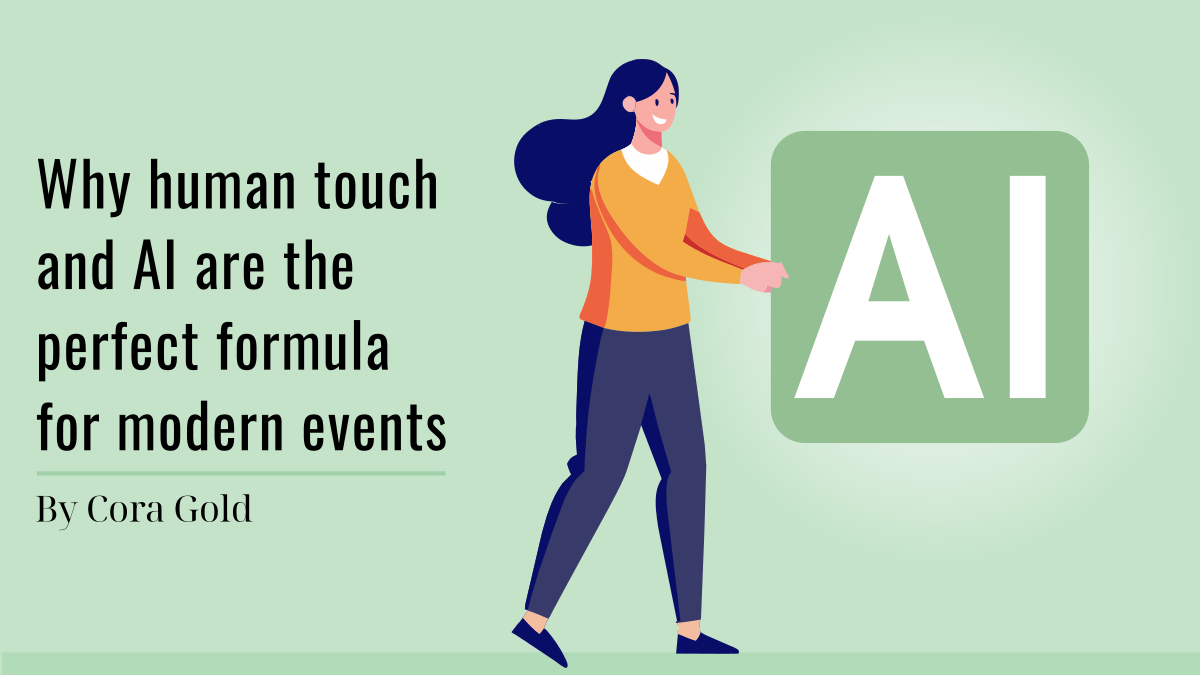
AI continues to show up in every corner of event planning, from drafting agendas to predicting which sessions your attendees will pack into. It’s tempting to let the tools handle everything, but the best events still hinge on real, human moments you can’t automate.
When you pair smart software with your own instincts and hospitality, you build gatherings people actually remember. Here’s how to balance new, exciting technology with your own human touch.
In this article...
AI’s Growing Role in Event Planning
The use of AI in event planning has grown quickly over recent years. Software can draft an agenda in minutes, flag scheduling conflicts before they happen, sort attendee registrations and even suggest icebreakers based on your guest list.
The U.S. Census Bureau found that AI usage increased across most sectors between December 2025 and May 2026, with larger companies adapting fastest. That kind of momentum means the tools available to you keep getting sharper each quarter, and it’s important to stay curious about what a new AI feature could take off your plate next.
Many planners now rely on AI-powered planning tools purely for the busywork, since they save time without sacrificing much creativity. One 2023 hospitality-education study found that AI chat tools speed up run-of-show documents and vendor emails, freeing up hours you’d rather spend on the parts of the job that actually need your judgment, such as walking a venue floor or negotiating with a caterer.
Think of AI as the assistant who handles the paperwork so you can focus on the room itself. That approach can free up real hours in your week, whether you’re managing a 50-person board retreat or a 2,000-person sales kickoff.
Where the Human Touch Still Matters Most
AI can build you a spreadsheet of session times in seconds, but it can’t read a room. Attendees remember the planner who noticed they looked lost and pointed them toward the right session, not the chatbot that answered a scheduling question. Trust builds through eye contact, a genuine laugh and a firm handshake.
When you’re using AI for event planning, keep the parts of your job that require empathy fully in your own hands. That might mean personally greeting a nervous first-time speaker backstage or noticing when a breakout session needs an extra 10 minutes. These are small calls that a dashboard cannot make for you.
Bridging AI and Real Connection
The best corporate events treat AI as a backstage assistant, not the face of the show. Recent meetings-industry research named live events the top trend for 2026, specifically because audiences are growing wary of AI-generated content and want real interactions.
Your value as a planner is growing, rather than shrinking, as AI advances. The planners who lean into unscripted, human moments, such as a candid Q&A or an unplanned meet-and-greet, build loyalty that keeps attendees coming back year after year.
A Real-World Look at Blended Event Experiences
You can see human and AI event planning partnerships already at work in major industry gatherings. For example, HubSpot’s UNBOUND conference uses an AI-powered app to build each attendee a personalized session schedule, then staffs info hubs with real people who can talk an attendee through a last-minute room change in person.
The combination of tech for logistics and people for the human moments is becoming the norm rather than the exception across large-scale corporate conferences. Smaller company events are adopting the same approach of using AI scheduling tools for the back end while keeping a real person at the registration table to greet every guest by name.
Picture a corporate retreat for 200 employees. You might let an AI tool draft the initial run-of-show and automatically flag catering deadlines. Simultaneously, you can personally manage the CEO’s speaking slot, greet VIP guests at the door and handle any last-minute room swaps yourself. The AI keeps the logistics on track in the background, but you’re still the one shaking hands, calming nerves and making sure the CEO’s introduction lands the way it should.
Demand for planners like you continues to climb. The Bureau of Labor Statistics projects 5% job growth through 2034 for meeting, convention and event planners, which is faster than the average occupation. There’s still plenty of room for planners who know how to use new tools well without losing the personal edge that got them hired in the first place.
Simple Ways to Blend Tech and Personal Touch at Your Next Event
A few small shifts can make the difference between an event that feels automated and one that feels well-hosted.
Let AI handle the scheduling grind. Use it to draft agendas, send reminder emails, sort registration lists and flag conflicts so you can spend your energy on the sessions themselves. Let the data suggest session times or room capacities, then use your own read of the room to make the final call on what actually serves you and your attendees.
Humans should continue to handle icebreakers and networking. Save the mingling for real conversation instead of scripted prompts. Research has even found that workplace friendships boost innovation and help people feel safer at work, something no chatbot can replicate.
You should also check in personally with VIP guests and speakers. A quick handwritten note or an in-person greeting before they take the stage means more than any automated confirmation email ever will.
Following an event, debrief with your team the old-fashioned way. Pull post-event data from your AI tools, then sit down together to talk through what actually felt right in the room, since numbers alone won’t tell you everything.
Circuits and Small Talk
AI can save you hours, but it can’t work a room, remember a name or read the energy shifting when a keynote drags on. The best corporate events happen when you let the tools handle the busywork and save your attention for the handshakes, the small talk and the moments guests actually remember. Build your next event on both, and you’ll give attendees an experience no algorithm could plan alone.