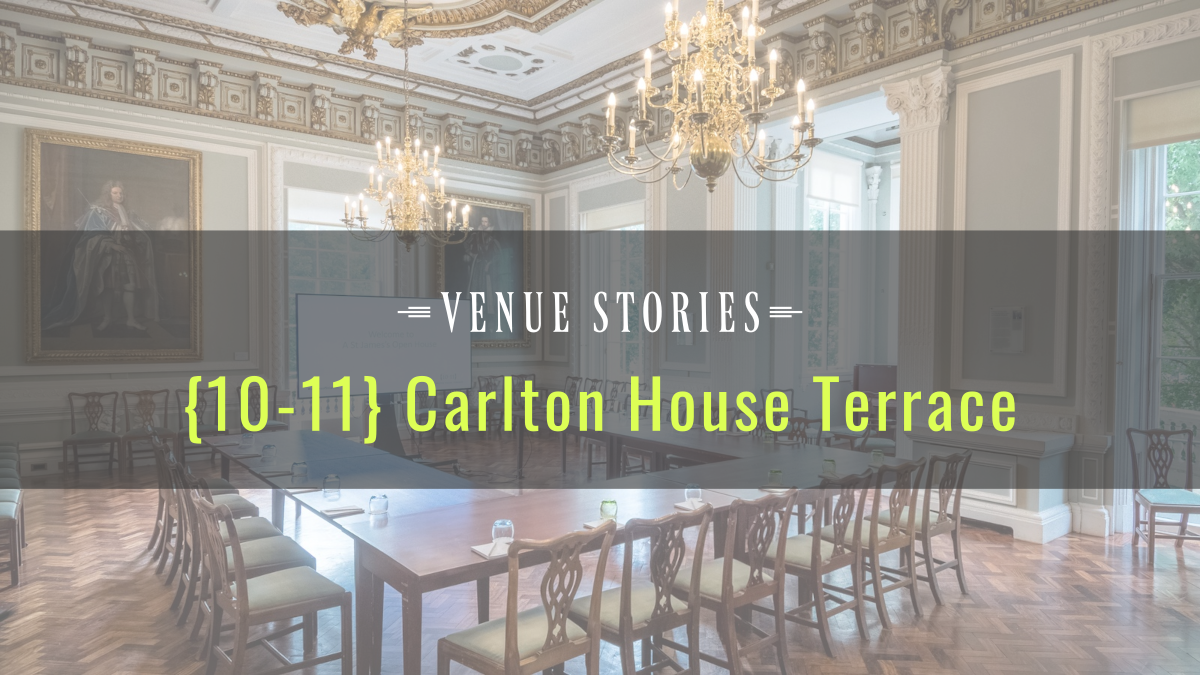
This episode of Venue Stories features 4 team members from {10-11} Carlton House Terrace in central London. The discussion highlights the history and location of the venue, home to the British Academy, alongside broad themes of team diversity, local food sourcing, sustainability practices, and changing industry trends.
The building is one of London’s finest Georgian treasures, the Terrace was designed by John Nash and constructed between 1827 to 1833. It was initially two separate homes each with their own fascinating histories, in 1923 process of combining the two houses began. Now {10-11} Carlton House Terrace is the home of the British Academy and a venue, often used by filmmakers, TV and the BBC. It’s also a great location for weddings.
This episode was recorded on location and features…
- Catherine Owen – Head of Venue Sales & Marketing
- Marion Baros – Venue Business Development & Marketing Manager
- Charlotte O’Kane – Event Planner from Searcys
- Richard Oxley – Searcys Group Executive Chef
We had a great conversation, discussing football, sausage rolls and of course the venue and what goes on there.
Key highlights
- Historical Venue Location: {10-11} Carlton House Terrace is a historic London venue designed by John Nash, constructed between 1827 and 1833, and now serves as the home of the British Academy while hosting weddings, TV, and film shoots.
- Team Diversity and Language Skills: The workforce at the venue is highly international. Across a team of 12 front-of-house and booking staff, 14 to 15 languages are spoken, helping the venue welcome diverse international clients.
- Local Sourcing and Community Support: Catering partner Searcys prioritises local British produce and independent suppliers. A notable example includes partnering with a small Streatham-based smoked salmon producer whose business expanded to larger premises following their support.
- Hands-on Supplier Training: The team organises trips to farms and suppliers—including visiting the Lake District to learn about regenerative farming—so staff across departments understand the provenance and effort behind the ingredients on the plate.
- Sustainability and Zero Waste Initiatives: The venue and its caterers focus heavily on reducing environmental impact by weighing waste, adhering to sustainability guidelines (such as removing mackerel when its conservation rating dropped), and donating surplus food to charity.
- Adapting to Evolving Event Trends: Driven by changing client and generational preferences (including Gen Z), event dining is moving away from formal three-course sit-down meals toward interactive bowl-food setups, live cooking stations, dessert stations, and expanded plant-based or low-alcohol options.
A huge thank you to our partners Vividink and Eventflow. You can find out more about them here. You can show your support by subscribing and don’t forget to share this episode with friends and colleagues.
Thanks also to Mattia Portello and the AV team at CHT for providing the recordings and to Alicia Earls at Patch Marketing for helping to put this episode together.
If you have something to say about this episode then leave a comment or head over to EPN Journal Community where you find out how you can share your thoughts.