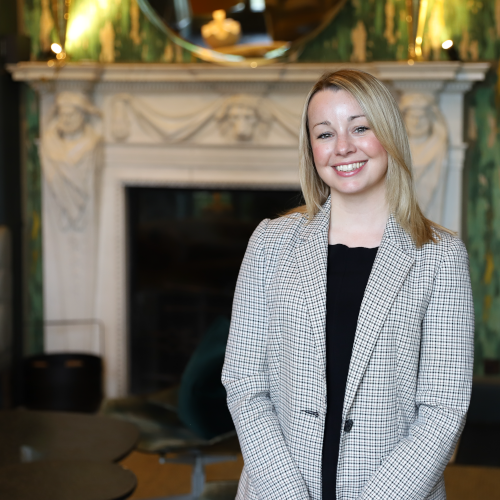
Jenna Johnson is an experienced hospitality professional with a strong background in luxury events management across some of London’s leading five-star hotels. She is the director of Events at The Grove, leading the resort’s events team with a focus on creativity, precision and outstanding service.
The luxury events sector is undergoing a significant transformation, shaped by evolving client expectations, technological advancement, and a broader shift in values. At the heart of this change is a growing demand for bespoke and highly personalised experiences. Clients are no longer satisfied with traditional formats; instead, they seek events that reflect their identity and values. Increasingly, events are curated as multi-sensory journeys, designed to create emotional connections and deliver lasting memories.
Alongside this, sustainability has emerged as a defining force within the industry. Where luxury events were once synonymous with excess and waste, rising environmental awareness and internal ESG policies are prompting a more considered approach. Organisers are embracing reusable materials, reducing waste, and introducing more sustainable elements such as plant-based catering. This evolution signals a clear shift from consumption-driven luxury toward a more conscious and responsible model.
Wellbeing is another area gaining prominence. Across corporate and luxury gatherings alike, there has been a noticeable rise in dedicated wellbeing sessions within event programmes. These moments, ranging from mindfulness workshops to quiet reflection spaces, allow delegates to step away from the intensity of the agenda and prioritise personal balance, enhancing both engagement and overall experience.
Looking ahead, the demand for hyper-personalisation and immersive storytelling shows no signs of slowing. As competition for high-value clients intensifies, brands are placing greater emphasis on relevance and impact. This focus is contributing to a notable compression of booking timelines, as events are increasingly aligned with timely opportunities rather than long-term schedules. What was once a six- to nine-month lead time has, in many cases, shortened to just two to four months. Full-scale residential events are now being confirmed only weeks before arrival. This trend is likely influenced by ongoing economic uncertainty, with clients more cautious about committing to significant expenditure too far in advance. Many are choosing to wait, monitoring financial markets, business performance, and geopolitical developments before making decisions. The result is a more reactive booking cycle.
This shift has also accelerated decision-making processes. Clients expect flexibility and rapid execution, while cancellations and rescheduling have introduced greater fluidity into the market. Increased last-minute availability further reinforces the perception that shorter booking windows are both feasible and advantageous.
Supporting this evolution is a move toward more agile event delivery. As formats become increasingly personalised and experience-led, organisers are moving away from rigid, standardised planning models. Instead, they are building flexible supplier networks and adopting modular approaches that enable high-quality execution within tighter timeframes. Technology plays a critical role here; processes that once required months of coordination can now be completed in a matter of weeks, particularly within the luxury tier where resources support speed and precision.
Taken together, these developments point to a broader industry shift. The luxury events sector is moving away from long-range, structured planning toward a more agile and responsive model – one in which speed, flexibility, and adaptability are becoming just as important as scale and spectacle.