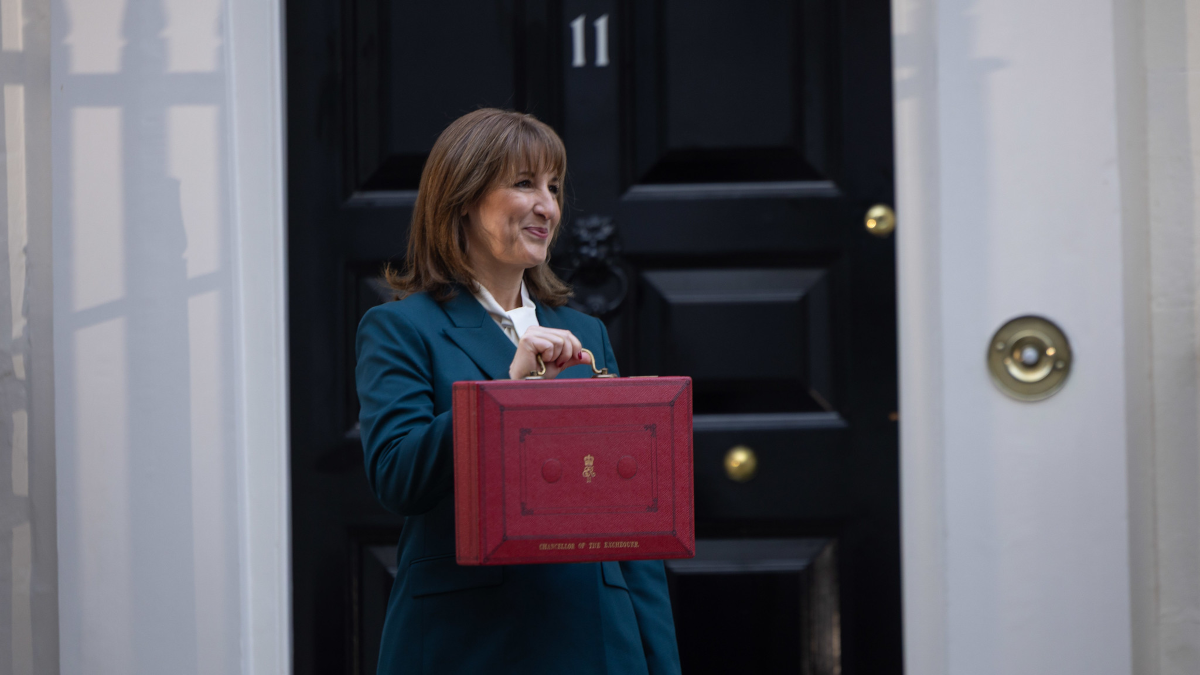
Yesterday, November 26th, the UK Chancellor Rachel Reeves announced the Autumn Budget. As expected, reactions from the other political parties were critical.
Many wondered why growth was implied but not explicitly stated during her speech, and there were many lively discussions focused on the Labour party manifesto promises on taxation and if they had broken any of them. And there’s more to come, the Office Of Budget Responsibility had released the contents of the budget on their website 40 minutes before the Chancellor addressed Parliament.
The day before the budget Alastair Winsey, founder and CEO of AIVA Revolution, shared his thoughts on what was in store for hospitality…
“Once again, the hospitality sector has been left to fend for itself. Costs for employers continue to climb, yet venues and small businesses have almost no room to raise prices when consumers are already stretched.
It’s becoming increasingly unviable for entrepreneurs to enter, or even remain in, the industry under these conditions. Hospitality is a vital pillar of our economy and holds our communities together; it needs meaningful support and investment if it’s going to modernise, compete and survive.”
Now that the budget has been revealed, many are also commenting on the lack of support. Dan Maimone, Head of Global Customer Experience at Harri, said…
“The Budget confirms the hospitality sector’s biggest fears, staffing costs will continue to rise with little support for the businesses expected to absorb them. Labour already represents up to 45% of operating costs, an uplift to £12.71 will materially impact hiring, scheduling, progression, and profitability across hospitality, ultimately hitting workers as well as businesses. According to trade body UKHospitality, the increase will add roughly £1.4 billion in additional costs across the sector. Operators cannot continue absorbing these increases alone. Without targeted support, businesses will be forced to scale back hours, reduce hiring, or increase prices.”
Further criticism come from Michael Shapiro, Commercial Property partner at law firm Spencer West LLP…
“It’s evident this is a “political” budget without producing anything to stimulate the mantra of “growth, growth, growth”. Despite lowering business rates for many retail and hospitality businesses through higher rates on warehouses used by online retail companies, the fact remains that the local high street has many empty retail and hospitality premises. Speaking with many commercial landlords and tenants which make up my client base, the main driver is the level of business rates, and the way that the business rating system works.
While an overhaul is scheduled for April 2026, this is something that needs to be addressed with urgency. Hospitality and retail businesses continue to struggle through the current system, which is further compounded by the rise in NI in the last Budget and the incoming rise to the minimum wage in January.
The domino effect of this on retail and hospitality workers, builders, and tradespeople cannot be underestimated, and the impact is clear to see by walking along any high street.”
The Meetings Industry Association (MIA) has also issued a statement on the budget. The MIA’s chief executive, Shonali Devereaux, has perhaps a more balanced view. On the issue of Business Rates, she welcomed the changes that would lower them…
“The government’s proposed reforms will provide welcome relief for over 750,000 retail, hospitality and leisure properties through lower business rates from April 2026. However, it is crucial that we receive confirmation that event venues are included within these defined industries. This statement from the Chancellor again reinforces the long-standing need for business meetings and events to be recognised as a distinct sector.
While our industry’s inclusion in the Business Rates reform would be a positive step, reminiscent of the targeted support venues received during the pandemic, many larger venues could still face increased costs to compensate. We have long called for broader support across the sector, and without clarity and comprehensive measures, this reform risks placing additional strain on the large venues that host major events, potentially impacting their ability to invest, grow, and maintain the high-quality experiences that underpin the UK’s events economy.”
On the subject of the minimum wage increase, she said…
“The business meetings and events sector has long provided a gateway into employment, providing vital first-step opportunities for young people, students and those re-entering the workforce. We fully support measures that enhance financial security for workers, but we must also recognise how our industry is uniquely exposed to the impact of minimum wage increases.
Many event venues and agencies rely heavily on temporary and casual staff to manage natural fluctuations in events and varying service requirements. As wage rates continue to rise alongside broader inflationary and operational costs, profit margins are being squeezed further, which could lead to reductions in staffing levels and, consequently, service and experience quality. This pressure risks weakening pathways into meaningful, long-term employment while placing additional strain on the workforce. Our MIA Insights already show that business meetings and events professionals are under pressure, and these changes are likely to intensify those challenges unless carefully managed within the context of our sector’s staffing model.”
Shonali shared her views on the upcoming changes to apprenticeships…
“The MIA welcomes the announcement of fully funded under-25 apprenticeships for SMEs , providing a guaranteed pathway for young people into training, education or work. With the persistent skills shortages and high recruitment pressures our sector currently faces, this could significantly strengthen the talent pipeline to enable more venues and agencies – many of which are SMEs – to bring in and train early-career talent to support the development of practical skills our industry needs.
Our industry has been proactively exploring ways to support and develop early-career talent since before the pandemic, ready to embrace the next generation and build a stable, future-ready workforce. Through The Power of Events, we have pioneered a not-for-profit framework, including school engagement initiatives, to support apprenticeships and develop early-career talent. This announcement reinforces our commitment to continuing this work, and we look forward to hearing more about how our industry can lead in this area”
MIA’s chief executive does hold a positive outlook for the future. For example, further discussions with Government departments and more support to enable future growth…
“The MIA has welcomed productive discussions with government departments in recent months, giving us confidence that our sector will receive the recognition and support it deserves in line with our economic contributions. In light of these discussions and today’s announcements, we now look forward to further conversations to ensure clarity on how these changes will affect our industry and how we can secure the support needed for continued growth.”
Much of what was announced will be phased in over time, so it will take a while to see how the changes and reforms will affect business in general, and hospitality specifically.
Thanks to the following for their contributions to this article, Sam Andrews, Jake Norman, Giselle Daverat and Louis Clark. Main image from HM Treasury on Flickr.